
ENERGY OPTIMIZATION OF DUST EXTRACTION SYSTEMS
Dust extraction systems are among the most energy-intensive installations in industrial production. Fans, filters, and airflow control systems often operate continuously, consuming large amounts of electricity. At the same time, valuable heat energy is frequently discharged without recovery.
The result is avoidable energy waste and higher overall operating costs – reducing profitability and limiting your company’s competitive advantage.
Energy optimization of dust extraction systems is not simply about reducing airflow. It is about creating a balanced system that delivers the required extraction performance while minimizing pressure loss, fan power, and unnecessary operation.



Optimized System Design for Lower Energy Consumption
Energy efficiency begins with correct system design. High pressure drop, turbulence, and unstable airflow increase energy demand and operating costs.
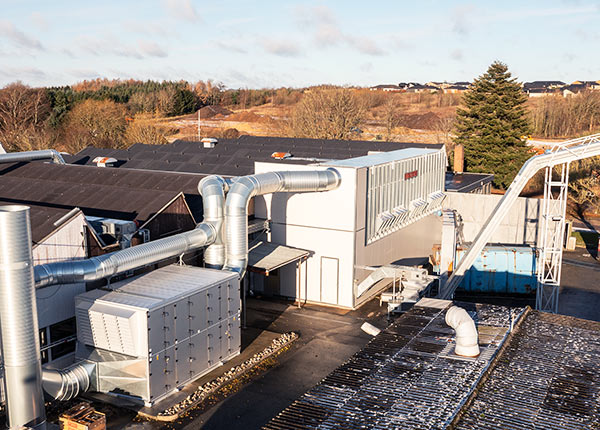
Moldow’s dust extraction systems are engineered to minimize pressure loss and ensure stable airflow conditions throughout the installation. By reducing interstitial velocity and turbulence inside filters and duct systems, we lower the required fan power and create a more energy-efficient operation.
This approach not only reduces electricity consumption but also improves filter performance and extends maintenance intervals.
Intelligent Energy Control with Energy Manager
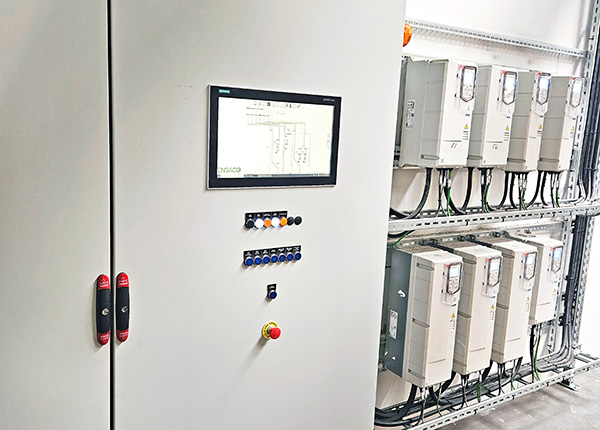
A major source of energy waste in dust extraction systems is constant full-capacity operation, regardless of actual production demand. Moldow’s Energy Control System ENSACO® ensures that your system only uses the airflow and energy required at any given time.
By dynamically adjusting airflow and system pressure to the actual need based on machine signals, ENSACO® reduces fan speed and motor load without compromising extraction efficiency. For many customers, this results in energy savings of up to 80%, while also reducing mechanical wear and extending system lifetime.

Heat Recovery – Reusing Extracted Energy
When contaminated air is extracted and cleaned, valuable heat energy is often removed from the building and processes along with the dust particles. Without heat recovery, this energy is simply lost.
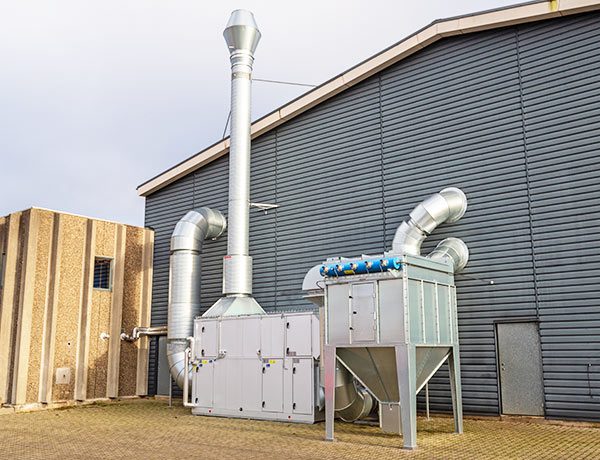
Moldow can include and integrate heat exchangers and air units into the extraction and ventilation system, allowing recovered heat to be reused in for pre-heating incoming air to production areas or returning to inclosed machines.
This significantly reduces fuel and heating costs while improving the overall energy balance of the facility. In many installations, heat recovery becomes a key contributor to both operational savings and sustainability targets.
Upgrading Existing Dust Extraction Systems
Many production facilities operate dust extraction systems that were designed for maximum capacity rather than optimized energy performance. Even relatively new systems may run with unnecessary airflow or inefficient control strategies.
Moldow offers energy assessments and optimization upgrades for existing installations. Through airflow measurements, pressure analysis, and system evaluation, we identify improvement areas and implement targeted upgrades such as intelligent control systems or airflow adjustments.
In many cases, substantial energy savings can be achieved without replacing the entire system.
Lower Costs and Reduced CO₂ Emissions
- Energy optimization provides more than lower electricity bills. It contributes to:
- Reduced CO₂ emissions
- Lower total cost of ownership
- Improved system stability
- Better documentation of energy performance
For manufacturers facing increasing energy costs and stricter environmental requirements, optimizing dust extraction systems is a highly effective way to improve both competitiveness and sustainability.
Would you like to understand the energy-saving potential of your dust extraction system?
Contact Moldow for an energy assessment and discover how intelligent control, optimized design, and heat recovery can reduce your operating costs while maintaining high extraction performance.